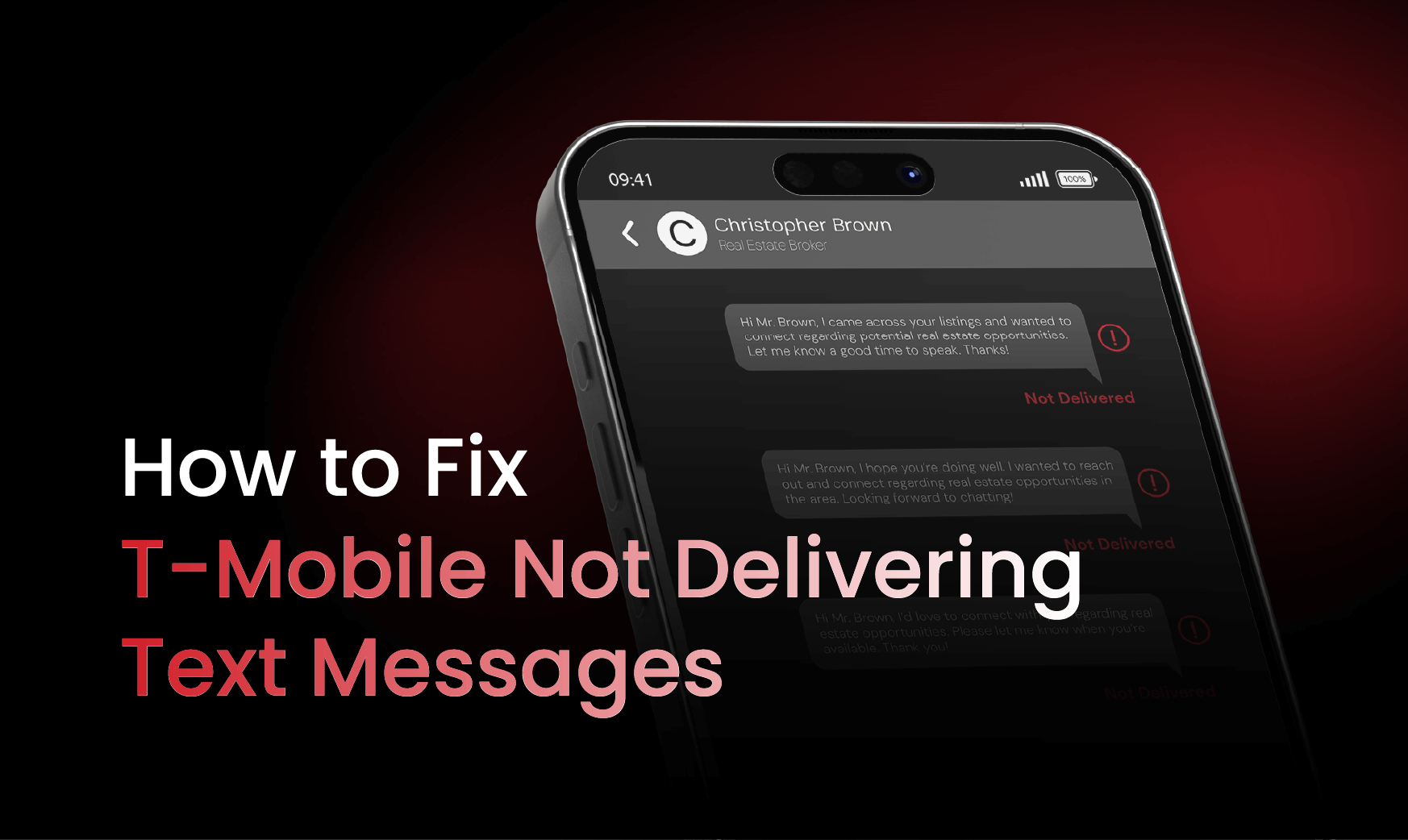
If you’ve noticed your bulk SMS campaigns experiencing unexpected delivery failures, you’re not alone. Many businesses using platforms like Easify are facing the same issue. The culprit? Carrier-level filtering that happens after your messages leave the platform.
The issue becomes particularly pronounced with T-Mobile numbers. While messages to T-Mobile subscribers may initially deliver without problems, campaigns with high concentrations of T-Mobile recipients often face blocking at the carrier level. This isn’t a platform failure. Business owners are struggling to maintain high delivery rates. But, there’s a fix: phone carrier filtering.
Using a T-Mobile Filter System to Segregate Numbers
To avoid blocking at the main carrier level, a T-Mobile filter system like phonecarrierfilter.com can be used to identify and separate T-Mobile and non-T-Mobile numbers. By reducing the percentage of T-Mobile numbers in a campaign, businesses can achieve higher SMS delivery rates.
How does a filtering system work?
Filtering systems often work through prefix-based carrier detection. Every phone number’s area code and prefix combination can be mapped to a specific carrier. By analyzing these prefixes, filtering tools categorize numbers (as T-Mobile, AT&T, Verizon, or other carriers).
Businesses typically use this approach as a pre-send step in their workflow. Before launching a mass SMS campaign, they run their contact list through a carrier filter tool. The tool returns a categorized list showing exactly which numbers belong to which carriers. With this information, businesses can decide whether to proceed with the full list or send to numbers without carrier blocking.
Want to understand carrier-specific filtering and manage it more effectively? Read on.
What is Main Carrier-Level SMS Blocking?
When you send an SMS through an API service like Twilio, your message goes through multiple checkpoints before reaching the end user. Many businesses assume that once their SMS platform accepts and processes the message, delivery is guaranteed. In reality, the main carriers (T-Mobile, AT&T, Verizon, and others) serve as final gatekeepers.
Carrier-level filtering operates independently from your SMS platform. Even if Twilio or another provider successfully receives and routes your message, T-Mobile can still block it based on their own filtering criteria. This creates a scenario where your platform reports successful sends while recipients never see the messages.
Platform-level issues might involve API errors, account suspensions, or technical failures that appear in your logs. Carrier-level blocking, however, happens silently downstream. Your delivery reports may show success, but the carrier has filtered the message before it reaches the subscriber’s device.
Why T-Mobile is a Critical Carrier in Mass SMS
If your SMS campaigns are seeing unexpected blocking, T-Mobile’s filtering rules are often part of the picture.
Here is why:
- T-Mobile has some of the strictest filtering rules among major carriers
- They actively limit how many messages they accept per campaign and per day
- These rules exist to protect users from spam, but they affect real businesses too
What typically causes trouble:
- Around 6,000 messages in a single campaign might trigger filtering
- Once limits are crossed, delivery drops fast
Why this is risky:
- Blocking does not stay limited to T-Mobile
- Hitting T-Mobile limits can hurt your sender reputation overall
- Other carriers may start filtering your messages too
Bottom line:
Managing T-Mobile volume is one of the biggest factors in keeping campaigns stable.
The Impact of High T-Mobile Percentage on SMS Delivery
The percentage of T-Mobile numbers in your list directly affects delivery success.
A list where 40 to 50 percent of contacts are on T-Mobile is far more likely to face blocking than a list where T-Mobile makes up only 5 to 10 percent.
When T-Mobile concentration is high, a few things happen:
- You hit volume limits faster
- Network congestion increases
- Filtering becomes more aggressive
In real campaigns, this difference is huge. Sending 10,000 messages with 5,000 T-Mobile numbers can result in 30 to 40 percent of messages being blocked. The same campaign with fewer T-Mobile numbers can reach delivery rates of 85 to 90 percent.
This is why businesses try to control T-Mobile exposure and reduce T-Mobile SMS blocking.
How Phone Carrier Filtering Helps Reduce Blocking
SMS carrier filtering solves a visibility problem.
By identifying which numbers in your list belong to T-Mobile, you can make smarter sending decisions in business text messaging before launching a campaign. Instead of sending blindly, you know where the risk lies. This helps with mass SMS deliverability.
Filtering helps you:
- Reduce the chance of hitting carrier limits
- Protect non T-Mobile messages from being blocked
- Avoid exhausting daily limits too early
With this insight, you can decide how to handle T-Mobile leads in your campaign: manage them more manually or exclude them from high-volume campaigns altogether.
Why Reducing T-Mobile Numbers Improves SMS Deliverability
If you’re running into Twilio SMS delivery issues, the cause is often linked to how carriers like T-Mobile handle message volume and filtering. T-Mobile has clear volume ceilings. The more messages you send to their network, the higher the risk of triggering filtering.
Reducing T-Mobile numbers lowers that risk in two ways:
- First, you stay under hard limits like campaign & daily thresholds.
- Second, you avoid triggering dynamic filtering that becomes stricter as volume increases.
Other carriers are usually more forgiving. When T-Mobile volume is controlled, AT&T and Verizon messages often continue delivering normally, even at higher speeds.
The result is better performance overall. Many businesses see delivery improve by 20 to 40 percent simply by managing T-Mobile traffic.
Phone Carrier Filtering vs SMS Compliance
Filtering helps with volume. Compliance helps with permission.
Reducing T-Mobile numbers will not protect you if your messages are non-compliant. Carriers still expect:
- Proper 10DLC registration
- Approved use cases
- Clear opt-in and opt-out handling
Filtering works best when compliance is already in place. Both are required for consistent delivery.
Best Practices for Managing T-Mobile Risk in Mass SMS
Successfully navigating T-Mobile’s filtering requires a multi-layered approach.
Use these habits to stay safe:
- Check T-Mobile percentage before every major send
- Segment or throttle when needed
Smart sending tips:
- Break large campaigns into smaller batches
- Spread T-Mobile sends across time
- Avoid sudden volume spikes
Recommended approach:
- Use carrier filtering every time
- Watch delivery reports closely
How Businesses Can Manage Carrier-Level SMS Challenges
Focus on these areas:
- Know that T-Mobile limits are lower than others
- Always review carrier mix before sending
- Control traffic instead of blasting everyone at once
Strategic options:
- Send to non T-Mobile numbers immediately
- Queue T-Mobile numbers for gradual delivery
- Limit T-Mobile on promotional campaigns
Always:
- Track failures and delivery reports
- Pause campaigns when blocking starts
- Adjust based on real results
Consistency is what protects your sender reputation.
Conclusion: Reduce Risk by Controlling T-Mobile Exposure
Carrier-level blocking continues to increase as mobile carriers intensify their spam protection measures. For businesses relying on SMS for customer communication, understanding and adapting to these filters has become essential.
T-Mobile SMS limits represent one of the major risks in mass SMS campaigns. The evidence is clear: reducing T-Mobile percentage in your campaigns improves delivery success significantly.
By combining compliance, carrier filtering, and smart send strategies, businesses can maintain high deliverability and avoid costly blocking issues.
Follow us on Instagram, LinkedIn, Facebook, and YouTube for more practical tips, real-world insights, and simple solutions to common SMS delivery challenges.
Try Free SMS Service with Easify and watch your revenue soar while your competition is still hitting send manually.
Stay connected with us! Follow Easify on Instagram, LinkedIn, Facebook, and YouTube for more marketing tips, strategy breakdowns, and real-time updates.